
TanyNKETSA
THE PROJECT
Taninketsa values the role of women in rural communities in the Ambanja district by training 104 female farmers in organic horticulture and supporting them in establishing a women-led agricultural cooperative. Through the adoption of sustainable practices and the development of a short supply chain — from cultivation to direct sales — the project increases the availability of fresh, locally grown vegetables. In doing so, it creates new sources of income, strengthens food security, and promotes women’s empowerment and economic cohesion within rural communities.
SECTORS OF INTERVENTION

Women empowerment,
sustainable agricolture
LOCATION

Ambanja District,
Madagascar
DONORs

Fondazione Peppino Vismara
8×1000 Chiesa Valdese
PArtners

Zoe Onlus
ADAPS
BENEFICIARIES

104 direct
2500 indirect
DURATION

24 months
(Jul2025 – Jul2027)
the problem
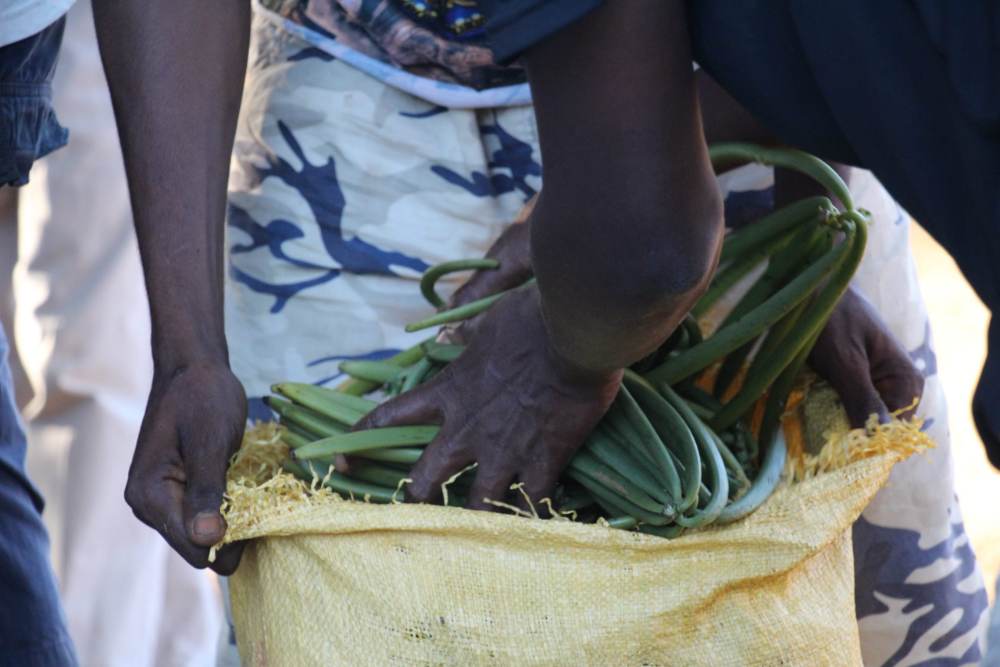
In the Ambanja district, located in the Diana region in northern Madagascar, local agriculture is dominated by export-oriented crops such as cocoa, vanilla, and coffee, which attract substantial investments but benefit only a few large producers.
This model, geared toward international markets, diverts essential resources away from food production for local consumption. As a result, communities are forced to rely on more expensive imported goods, leading to diets based almost exclusively on rice.
This dependency on external food sources leads to nutritional deficiencies and serious health consequences, creating a vicious cycle of malnutrition and poverty.
Traditional farming practices used in the area are inadequate to ensure consistent yields: the techniques employed are inefficient, lack resilience, and deplete both soil and water resources.
THE ROLE OF WOMEN
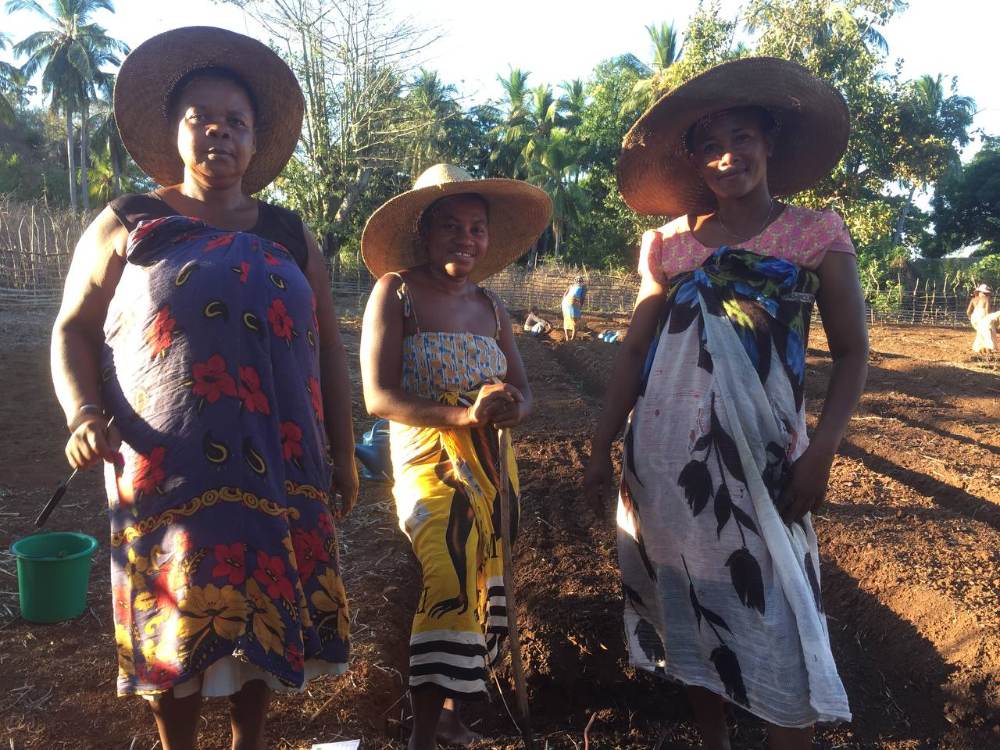
Women are the backbone of small-scale agriculture, yet they are forced to work using traditional and outdated practices that fail to produce enough even for subsistence.
Systematically excluded from training opportunities, they lack access to knowledge about sustainable and resilient techniques, preventing them from increasing productivity, generating surplus, and achieving economic independence.
In a context increasingly affected by drought and extreme climate events, this fragile production system fuels a vicious cycle of poverty and food insecurity—one that disproportionately affects women and children.
THE SOLUTION
To address the identified needs, Taninketsa adopts an integrated approach based on three pillars: training, infrastructure, and community engagement.
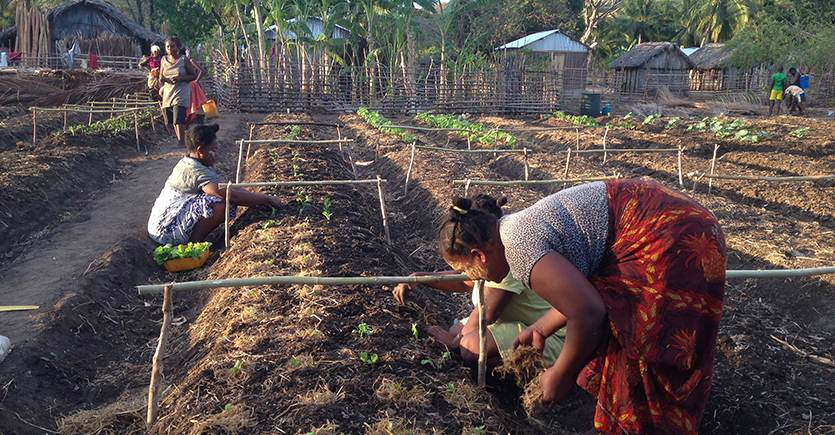
First, 104 women will acquire skills through two 18-month training programs: one in organic and sustainable horticulture (combining theory and “learning by doing”) and the other in entrepreneurship and cooperative governance.
At the same time, eight hectares across four villages in the Ambanja district will be restored using soil conservation techniques and equipped with solar-powered irrigation systems. A short supply chain will be established to integrate the production, storage, and direct distribution of organic, locally grown vegetables.
Finally, workshops and awareness campaigns targeting families and schools will promote the importance of a diverse and balanced diet based on local produce, helping to consolidate healthy eating habits and strengthen women’s leadership in decision-making processes.
This model, designed to ensure both sustainability and replicability, aims to improve food security and economic opportunities for the women involved and can be scaled to benefit other rural communities across Madagascar.
objectives
main objective
To promote an inclusive society where women play an active role as drivers of change in their communities, contributing to improved food security and the sustainable transformation of the local agricultural sector.
specific objectives
- Strengthen women’s skills and entrepreneurial capacities, increasing their resilience and income-generating opportunities through intensive training programs and the creation of a women-led agricultural cooperative.
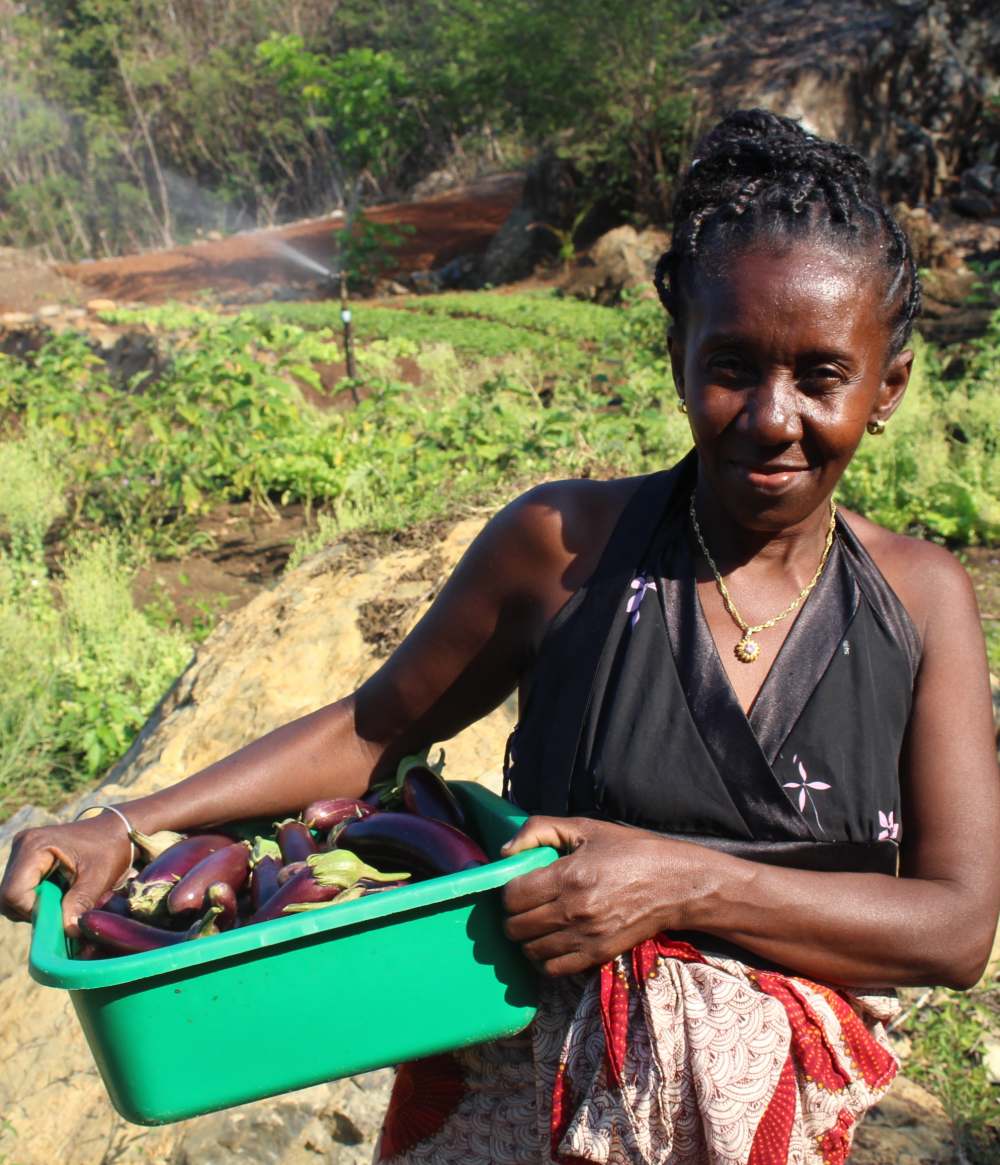
- Increase the availability of healthy, organic, and locally grown horticultural products by developing a short supply chain that integrates production, storage, and direct distribution.
The activities
Thanks to the collaboration between Kukula, Zoe Onlus, and the local partner ADAPS, Taninketsa will spark a virtuous cycle of training, land restoration, and community engagement to revive sustainable agriculture in the villages of Ampondrabe, Andranomandevy, Ankingabe, and Antsampahano.
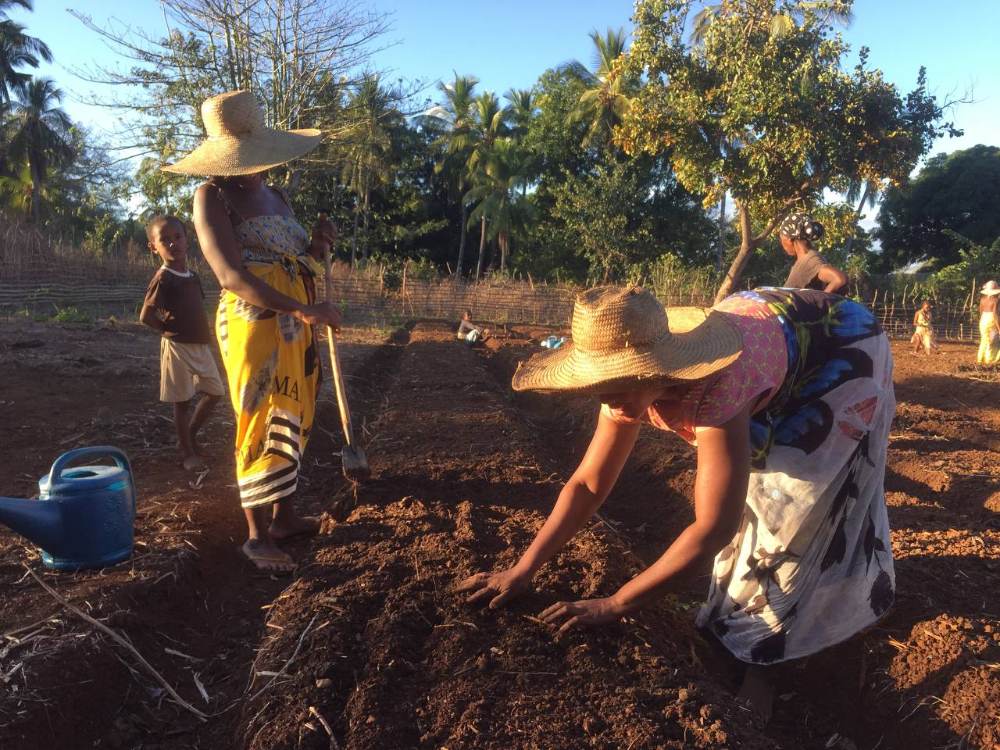
TRAINING IN AGRICULTURAL TECHNIQUES AND FINANCIAL MANAGEMENT
Two 18-month programs: one focused on sustainable horticulture (combining theory and “learning by doing” on production sites), and the other on cooperative economics (including financial literacy, planning, and management), with continuous follow-up to consolidate newly acquired skills.
ESTABLISHMENT OF A WOMEN-LED AGRICULTURAL COOPERATIVE
A fully women-led agricultural cooperative will be formally established with legal and administrative support. This new entity will organize horticultural production, foster collaboration among members, and ensure direct access to local markets. Designed to be sustainable and replicable, the cooperative will offer women concrete opportunities for socio-economic inclusion and income generation, extending benefits to the entire community.
LAND RESTORATION AND DEVELOPMENT OF A SHORT SUPPLY CHAIN
Eight hectares in the villages of Ampondrabe, Andranomandevy, Ankingabe, and Antsampahano will be enhanced through soil conservation techniques (such as composting and crop rotation) and equipped with solar pumps to enable continuous irrigation, even during the dry season or extreme weather events. Once restored, the land will be cultivated with vegetables selected based on soil characteristics, community needs, and local demand. In parallel, a short supply chain will be developed, integrating harvesting, storage, and direct sales, to provide fresh, high-quality, locally sourced produce and reduce the communities’ dependency on imports.
COMMUNITY AWARENESS AND NUTRITION EDUCATION
Through workshops and information campaigns, the project will promote the consumption of locally grown, zero-kilometer produce and the adoption of a balanced diet.
These initiatives aim to raise nutritional awareness and encourage changes in eating habits, contributing to improved food security and the overall well-being of the community.
DONORS


OTHER PROJECTS

zero
carbon


AGRICULTURAL
FEELING

tree
hugs

TANY
VAO